Tile quantity
Turn surface area into tile pieces and boxes.
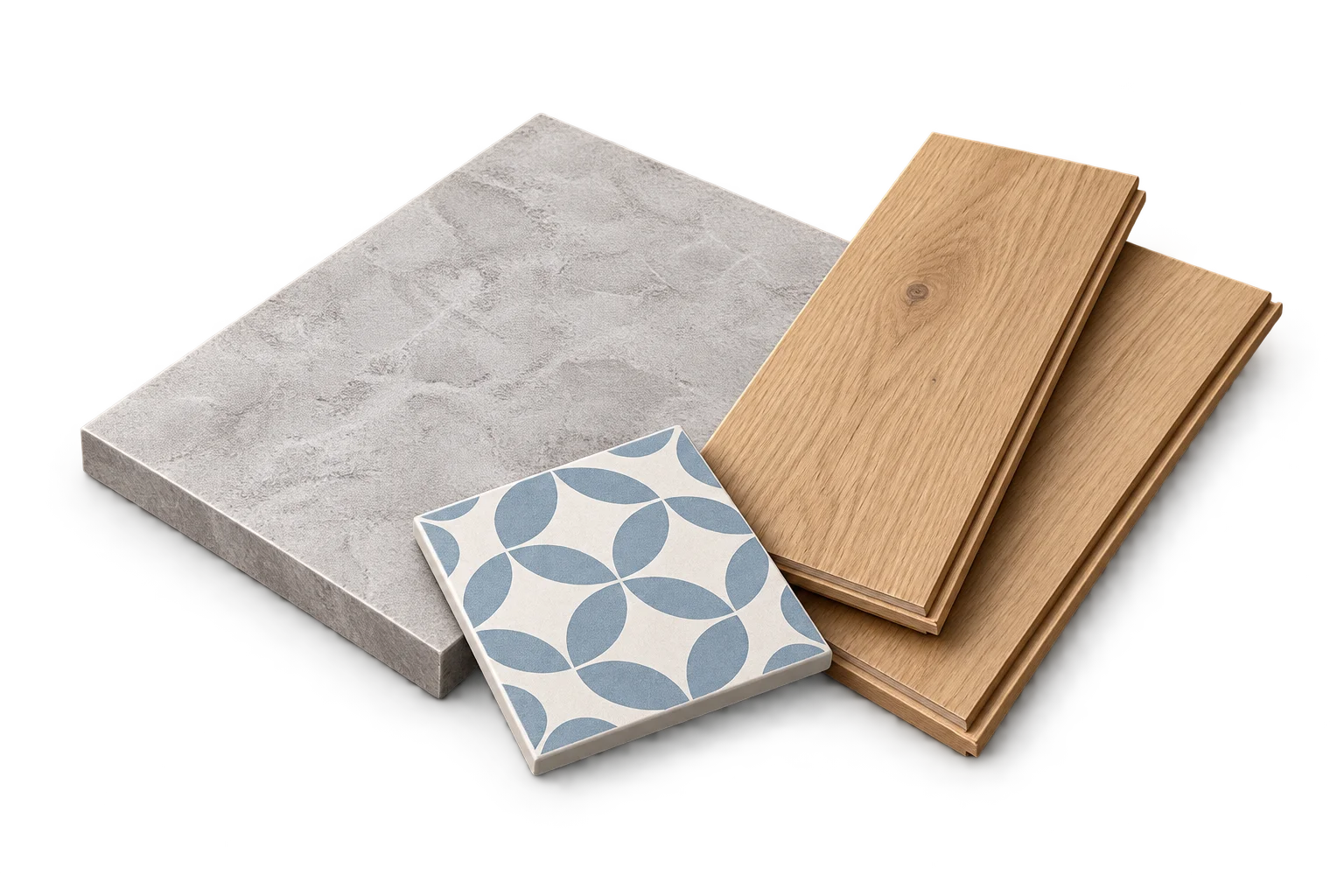
Estimate tile boxes, flooring cartons and drywall sheets with separate material inputs, net area, allowances and purchase surplus.
Turn surface area into tile pieces and boxes.
Combine room areas and round up to cartons.
Estimate sheet counts from net surface area.
Start with the job you are measuring. Keep its dimensions and assumptions together.
Estimate tile boxes for separate backsplash runs with measured exclusions, chosen allowance and the actual pieces per box.
Calculate bathroom tile area with different coverage heights on each wall, measured openings and whole-box purchasing.
Combine compatible tile quantities for several floor areas before box rounding while keeping each source area measurable.
Plan flooring for multiple rooms with compatible carton specifications, one checkable area total and clear purchase surplus.
Include closets and alcoves in a flooring estimate using non-overlapping rectangles and the selected carton coverage.
Estimate drywall sheets for room walls after measured openings, using the selected sheet size and a visible allowance.
Estimate drywall sheets for separate ceiling areas with measured openings and an explicit selected board specification.
Follow each quantity from the measured space to the amount you order.
Measure each section and choose its units. Keep separate areas and openings explicit.
Review the measured area or quantity before applying your material settings and allowance.
Enter an allowance that suits your job. See it separately from the net quantity.
Use your product's yield or capacity. Round up whole packs only after the required quantity is known.
See why a small change in your selected allowance can add a whole package, and keep that purchasing effect separate from the material need.
Read the guideCompare flooring cartons by actual coverage and whole-pack quantity instead of assuming every box represents the same amount.
Read the guideEnter tile dimensions and the number of pieces in a box. The calculator explains the area-based piece requirement and the whole boxes that supply it. It does not promise a cutting layout.
Use the coverage stated for your selected carton. Combine rooms only when the flooring and purchasing specifications match. A different box size is a different purchasing specification.
Enter the sheet width and height along with the net wall or ceiling area. The result is an area-based sheet estimate. Openings, orientation, seams and usable offcuts still need project-specific consideration.
Your chosen allowance increases the target quantity. Buying whole packs may add more again. Keep these two amounts separate so the shopping list does not label all unused coverage as waste.
Original derivations using geometry, ratios, sums and whole-package rounding. Each calculator explains its assumptions and worked examples.
The source for the coverage, mixed yield, density, package capacity, sheet dimensions or wallpaper repeat that you enter.