Material calculator
Tile Quantity Calculator
Convert measured tile area into a clear piece and box estimate.
Your measurements
Changing units changes the display, not the stored measurement.
Results
Example inputs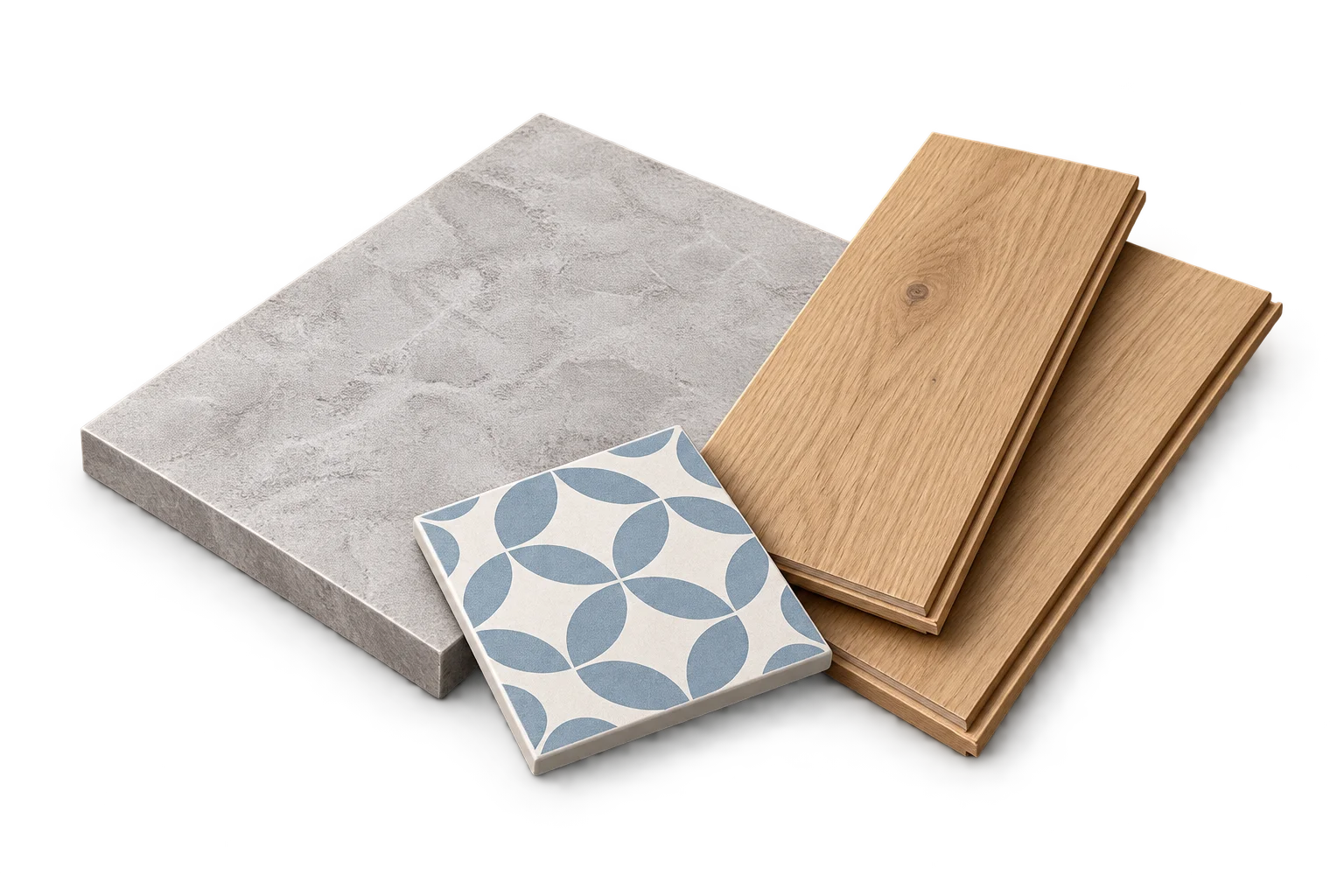
Your result will appear here
Enter the measurements and product details, then calculate.
An area estimate, not a cutting layout. Cuts, shape and pattern placement can affect what you buy.
Measure the area that will be tiled
Add the rectangular floor or wall sections you intend to tile, and deduct measured openings or areas that will remain uncovered. Keep separate shapes visible even if they use the same tile. This helps prevent an overlap or missing return from disappearing inside a total.
Enter the dimensions of one tile and the number of pieces supplied in a box. Use the product you intend to buy rather than a visually similar sample. The area method uses tile face dimensions; it does not design grout spacing or a cutting arrangement.
Separate pieces from boxes
After applying your chosen allowance, divide the required area by one tile’s face area and round up to a whole piece. Then round the piece requirement up to complete boxes. Show both quantities so the shopping list explains why the box purchase is larger.
Example: 300 mm square tiles
A net area of 10 m² with a chosen 10% allowance requires 11 m². Each 0.3 m by 0.3 m tile covers 0.09 m². The area-based minimum is 123 pieces. With 12 pieces per box, the purchase is 11 boxes, containing 132 tiles.
Those tiles have a combined face area of 11.88 m². That is 0.88 m² above the allowance-adjusted requirement, or 1.88 m² above the original net area. The two comparisons answer different questions and should not be labelled interchangeably.
Use matching specifications for a shared purchase
Room quantities can be combined before box rounding when tile dimensions, product specification and box size agree. A different format or box count remains a separate line. Do not add unlike box counts into one total.
Area is not a cutting plan
Edges, patterns, openings and orientation can affect how tiles are used. This calculation does not prove that a particular cut layout is possible or choose a suitable allowance. Review the layout and product requirements separately.
Frequently asked questions
Does the estimate include a fixed waste percentage?
Use the allowance you select for your project. Example percentages explain the arithmetic and are not installation recommendations.
Why show both pieces and boxes?
The piece count is an area-based minimum after allowance. The box count reflects the complete packages you actually purchase.
Sources and method
- PackLedge quantity methods
Original derivations using geometry, ratios, sums and whole-package rounding. Each calculator explains its assumptions and worked examples.
- Your selected product label or technical sheet
The source for the coverage, mixed yield, density, package capacity, sheet dimensions or wallpaper repeat that you enter.