Gravel volume
Estimate volume, optional weight and packaging.
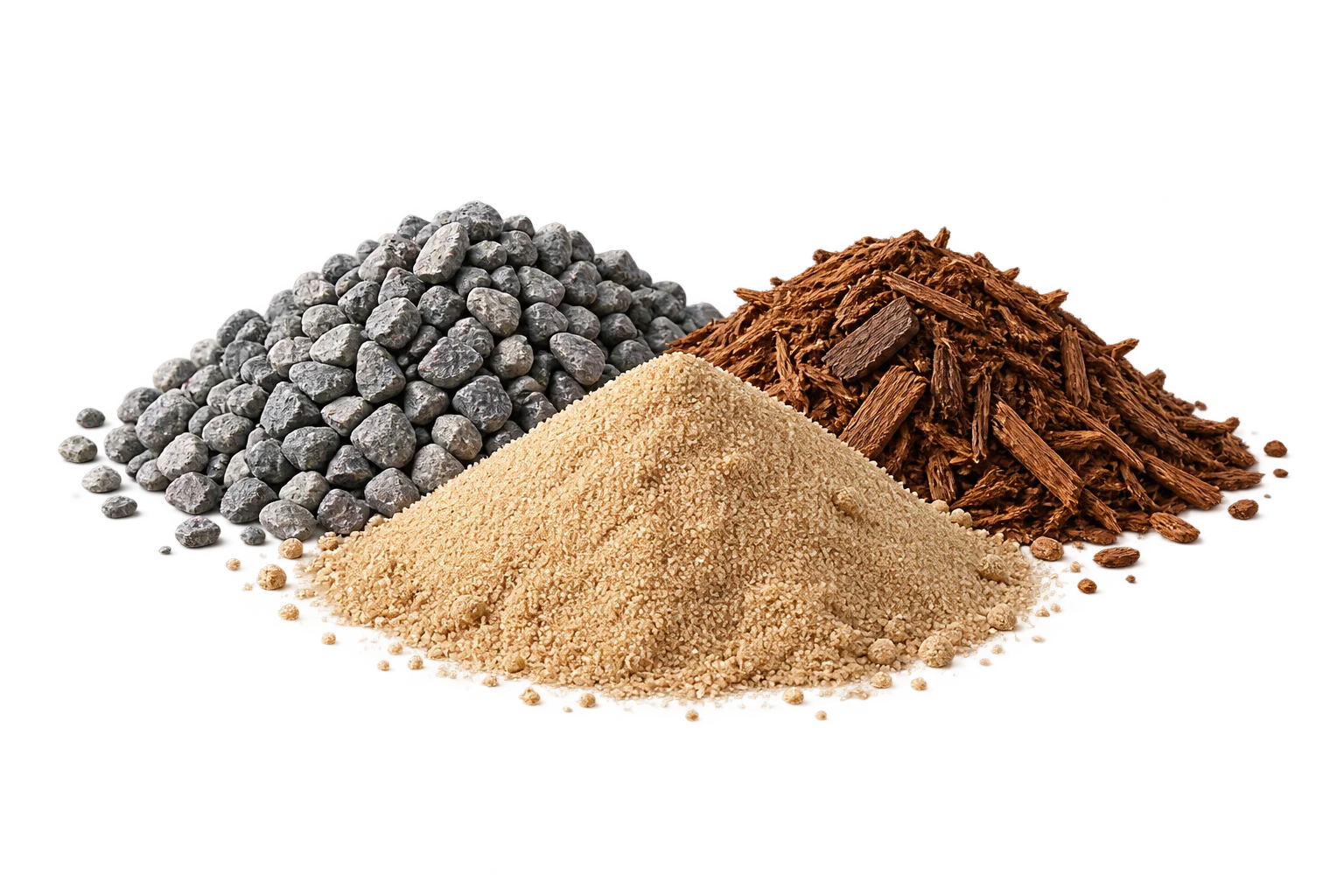
Estimate gravel, sand and mulch volume, optional density-based weight and whole bags for measured outdoor areas.
Estimate volume, optional weight and packaging.
Plan area, depth and packaging for your sand.
Measure beds and compare bags with bulk.
Start with the job you are measuring. Keep its dimensions and assumptions together.
Estimate gravel for measured driveway sections, retain exclusions and calculate volume before asking for a density-based weight.
Calculate gravel for paths with different widths using separate measured sections, chosen depth and actual bag capacity.
Estimate sand volume for a specified paver bedding area, keeping chosen layer depth and supplier packaging separate from the calculation.
Combine mulch quantities for separate garden beds while retaining exclusions, chosen depths and bag-volume assumptions.
Plan gravel, sand and mulch in one project without combining incompatible materials, density assumptions or package units.
Follow each quantity from the measured space to the amount you order.
Measure each section and choose its units. Keep separate areas and openings explicit.
Calculate the measured volume first. Subtract any supported displacement before adding an allowance.
Enter an allowance that suits your job. See it separately from the net quantity.
Use your product's yield or capacity. Round up whole packs only after the required quantity is known.
Compare bagged and bulk material quantities without assuming prices, delivery terms, package capacities or a universal density.
Read the guideIdentify metric tonnes and US short tons before comparing bulk-material quantities or copying a supplier’s mass quote.
Read the guideMeasure each included rectangle and enter its length, width and the layer depth already chosen for your project. Divide a changing footprint into non-overlapping rectangles, leaving uncovered parts out. Keep gravel, sand and mulch as separate materials.
A volume does not determine a weight without density. Add a value supplied for your material if you need a mass estimate. Otherwise, keep the volume result and ask the supplier to confirm the purchasing unit.
You might buy a material by volume, mass or bag. Record the unit and bag capacity rather than treating a bag or a ton as a universal amount. Metric tonnes and US short tons are labelled separately.
Original derivations using geometry, ratios, sums and whole-package rounding. Each calculator explains its assumptions and worked examples.
Reference for unit conversions and clear identification of metric and customary units. Exact base-unit definitions are retained in calculations rather than rounded display factors.
The source for the coverage, mixed yield, density, package capacity, sheet dimensions or wallpaper repeat that you enter.