Brick & block quantity
Use face dimensions, openings and joints.
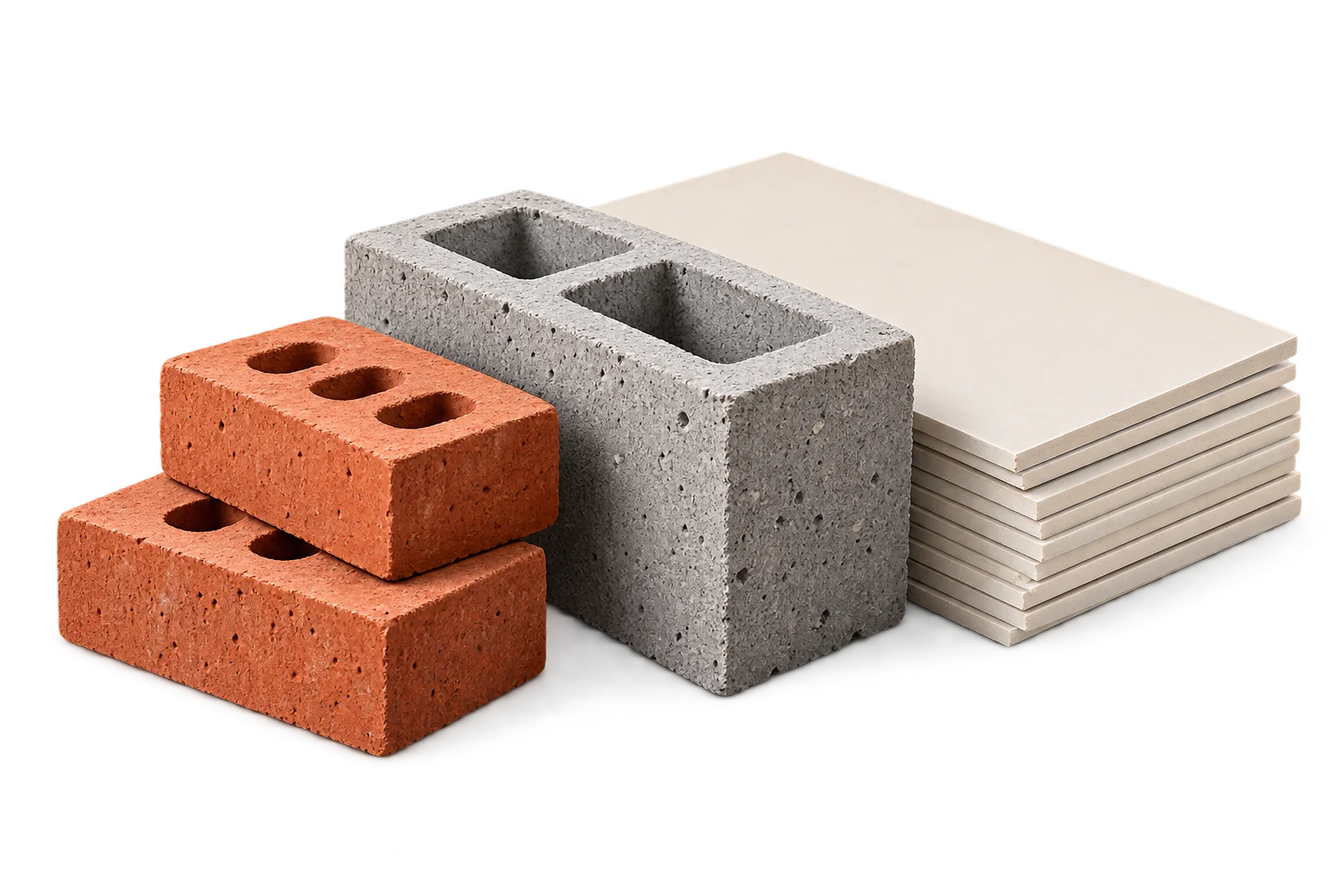
Estimate brick and block face quantities from wall dimensions, openings, unit sizes and the joint widths you enter.
Use face dimensions, openings and joints.
Start with the job you are measuring. Keep its dimensions and assumptions together.
Estimate face units for a specified garden wall using actual unit and joint dimensions, with quantity-only limits made clear.
Estimate brick or block units after deducting measured wall openings, with explicit joint-module and boundary assumptions.
Follow each quantity from the measured space to the amount you order.
Measure each section and choose its units. Keep separate areas and openings explicit.
Review the measured area or quantity before applying your material settings and allowance.
Enter an allowance that suits your job. See it separately from the net quantity.
Use your product's yield or capacity. Round up whole packs only after the required quantity is known.
A masonry unit takes up its own face area plus the joint space assigned to it. Enter horizontal and vertical joint widths with the unit dimensions. The resulting module is an area approximation.
Doors, windows and other unfilled areas reduce the net wall face. Record each opening and check that the deducted area does not exceed the surface it belongs to.
This calculator does not design a bond, count corners precisely, choose foundations or estimate mortar. Use it to review a material quantity after your wall and unit specifications are known. Structural and installation decisions need their own assessment.
Original derivations using geometry, ratios, sums and whole-package rounding. Each calculator explains its assumptions and worked examples.
The source for the coverage, mixed yield, density, package capacity, sheet dimensions or wallpaper repeat that you enter.