Calculation method
From Volume to Weight Using Density
Volume and mass are different quantities. Density is the information that connects them.
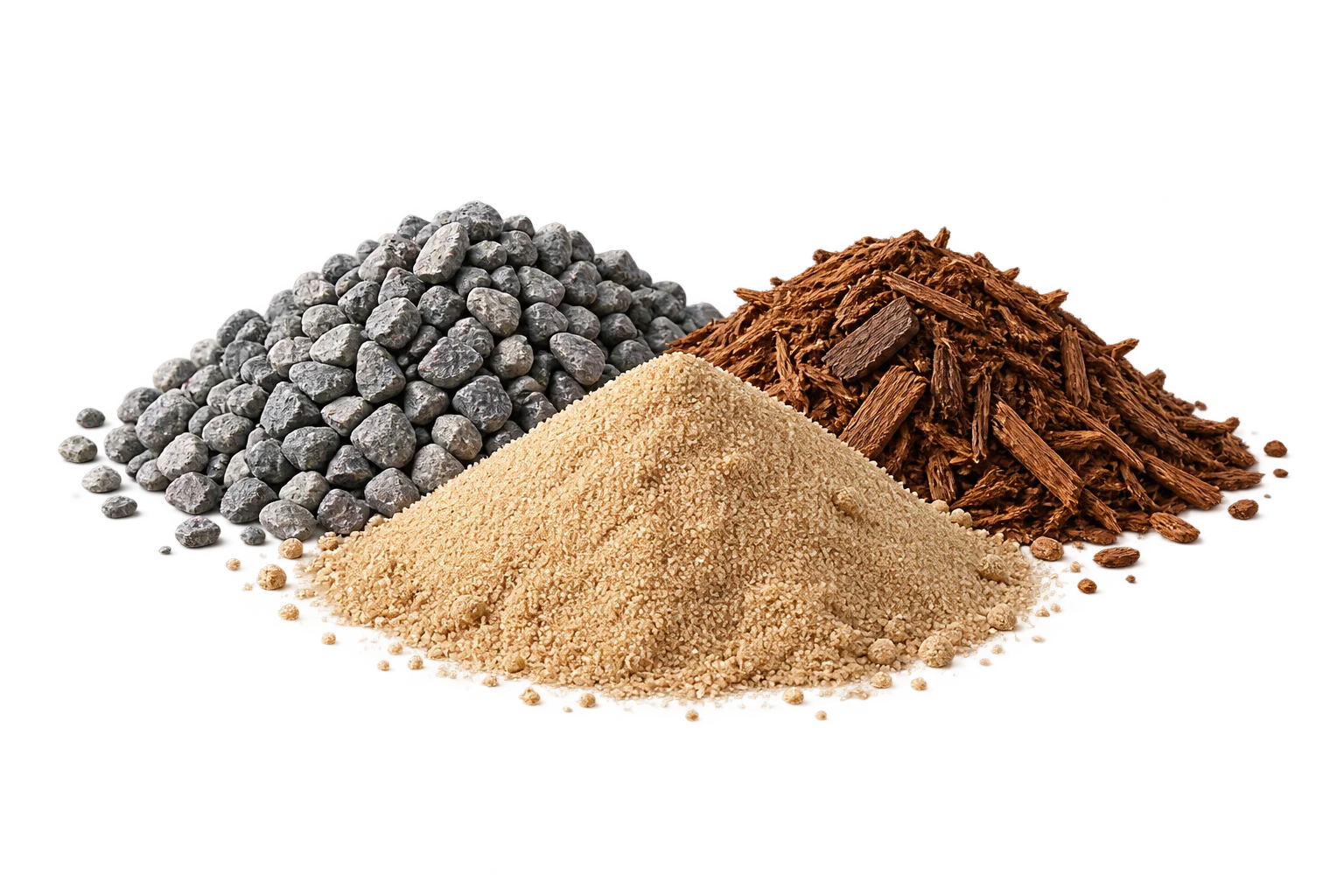
What a density value means in the calculation
Density states a mass for a unit of volume. If its unit is kg/m³, multiplying it by a volume in m³ gives kilograms. The volume units cancel; the mass unit remains. A volume by itself cannot establish a weight.
Use a density supplied for the material and basis relevant to your order. A number copied from another material or an unexplained generic table may not describe the product you are buying.
Convert units before multiplying
Put volume and density on compatible units. A value in kg/m³ cannot be multiplied directly by litres as bare numbers. Convert the volume first, or convert the density using an equivalent unit basis. Keep the entered density and its source description visible.
Example with a user-supplied density
An illustrative net gravel volume is 2 m³. A chosen 10% allowance makes the required volume 2.2 m³. If the user supplies a density of 1,600 kg/m³ for that material basis, the corresponding required mass is 3,520 kg.
The example density is not a preset or recommendation. Without it, 2.2 m³ remains a valid volume result while the weight is unavailable. This is a complete and useful state, not a reason to substitute one tonne per cubic metre.
Label the selected mass unit
A metric tonne is 1,000 kg. A US short ton is 2,000 pounds, equivalent to 907.18474 kg using the exact pound definition. They are different units. The example mass is 3.52 metric tonnes, or about 3.880 US short tons.
The interface and export should retain the chosen label instead of using an ambiguous ton. Display rounding should not replace the conversion constants or the unrounded mass used by later calculations.
Keep the quantity basis consistent
Confirm that the density and volume refer to compatible conditions or definitions supplied for the material. The calculator does not infer moisture, packing, compaction or supplier measurement practice from a material name.
When two project lines use different density assumptions, keep those assumptions separate. Adding their masses may be mathematically possible after conversion, but that alone does not make them one compatible material order.
Frequently asked questions
Can I estimate weight without density?
No reliable weight follows from volume alone. Keep the volume and obtain a suitable density or a supplier-confirmed purchasing quantity.
Sources and method
- PackLedge quantity methods
Original derivations using geometry, ratios, sums and whole-package rounding. Each calculator explains its assumptions and worked examples.
- NIST — SI Units ↗
Reference for length, mass, area, volume and the distinction between base and derived units.
- NIST Guide to the SI — Conversion Factors ↗
Reference for unit conversions and clear identification of metric and customary units. Exact base-unit definitions are retained in calculations rather than rounded display factors.
- Your selected product label or technical sheet
The source for the coverage, mixed yield, density, package capacity, sheet dimensions or wallpaper repeat that you enter.
- NIST — New Assignment of Mass Values and Uncertainties to NIST Working Standards ↗
The article’s introduction states the exact avoirdupois-pound definition: 1 lb = 0.45359237 kg. Multiplying that exact definition by 2,000 gives the 907.18474 kg US short-ton conversion used here.